When a tooth is severely damaged, decayed, or infected, the common question is whether to save it with root canal treatment or remove it through extraction. The right choice depends on the tooth's condition, the extent of infection, and overall oral health, since dentists generally aim to save a natural tooth whenever it can be done safely and predictably.
Root Canal Treatment vs Tooth Extraction: Quick Comparision
| Factor | Root Canal Treatment | Tooth Extraction |
|---|---|---|
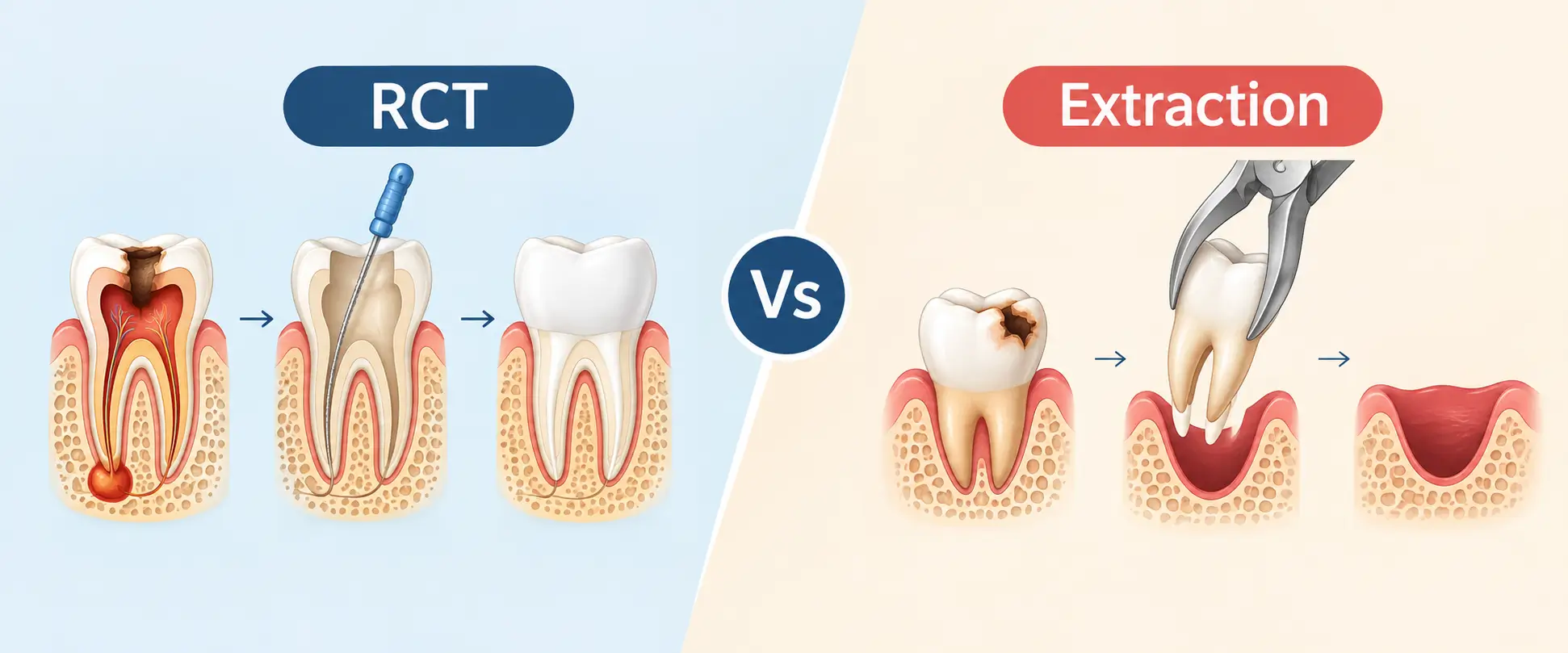
| What it does | Removes infected pulp and saves the natural tooth | Removes the tooth completely |
| Best suited for | Teeth with enough healthy structure and treatable infection | Teeth beyond repair, severely fractured, or badly decayed |
| Impact on neighbouring teeth | None, since the natural tooth stays in place | Can shift over time if the gap isn't replaced |
| Follow-up need | May need a crown to protect the treated tooth | Usually needs a replacement (implant, bridge, or denture) |
| Typical visits | 1 to 2 visits in most cases | Usually 1 visit for the extraction itself |
This comparison gives a general picture. The right option for a specific tooth depends on a clinical examination and X-rays, not on this table alone.
What Is Root Canal Treatment?
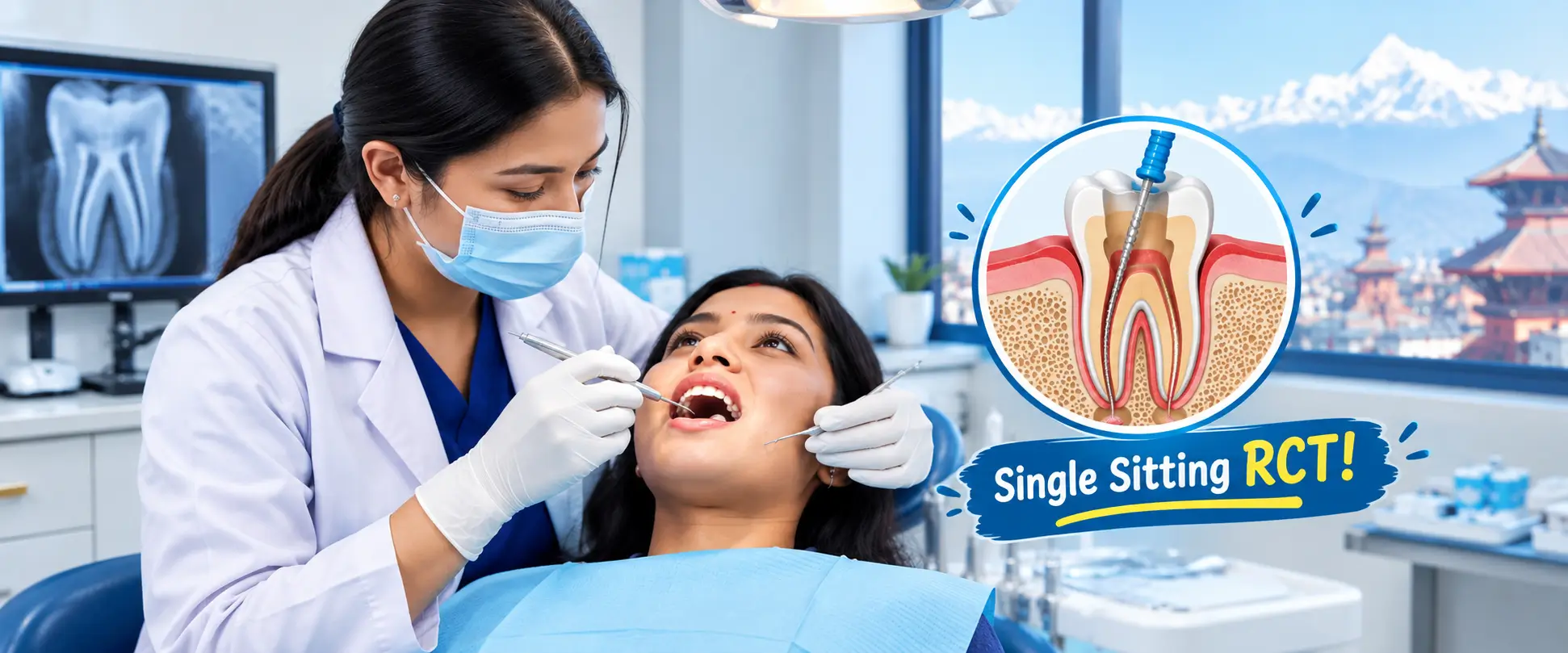
Root canal treatment saves a tooth that has been severely infected or damaged. The dentist removes the infected or damaged pulp inside the tooth, cleans and disinfects the root canals, and seals the tooth. A crown is often recommended afterward to protect and strengthen it.
Root canal treatment may be recommended when:
• The tooth has a deep cavity
• The dental pulp is infected
• The tooth is painful or sensitive
• The tooth has been damaged due to trauma
• The tooth structure can still be restored
• The infection can be successfully treated
The biggest advantage of root canal treatment is that it keeps the natural tooth in place.
What Is Tooth Extraction?
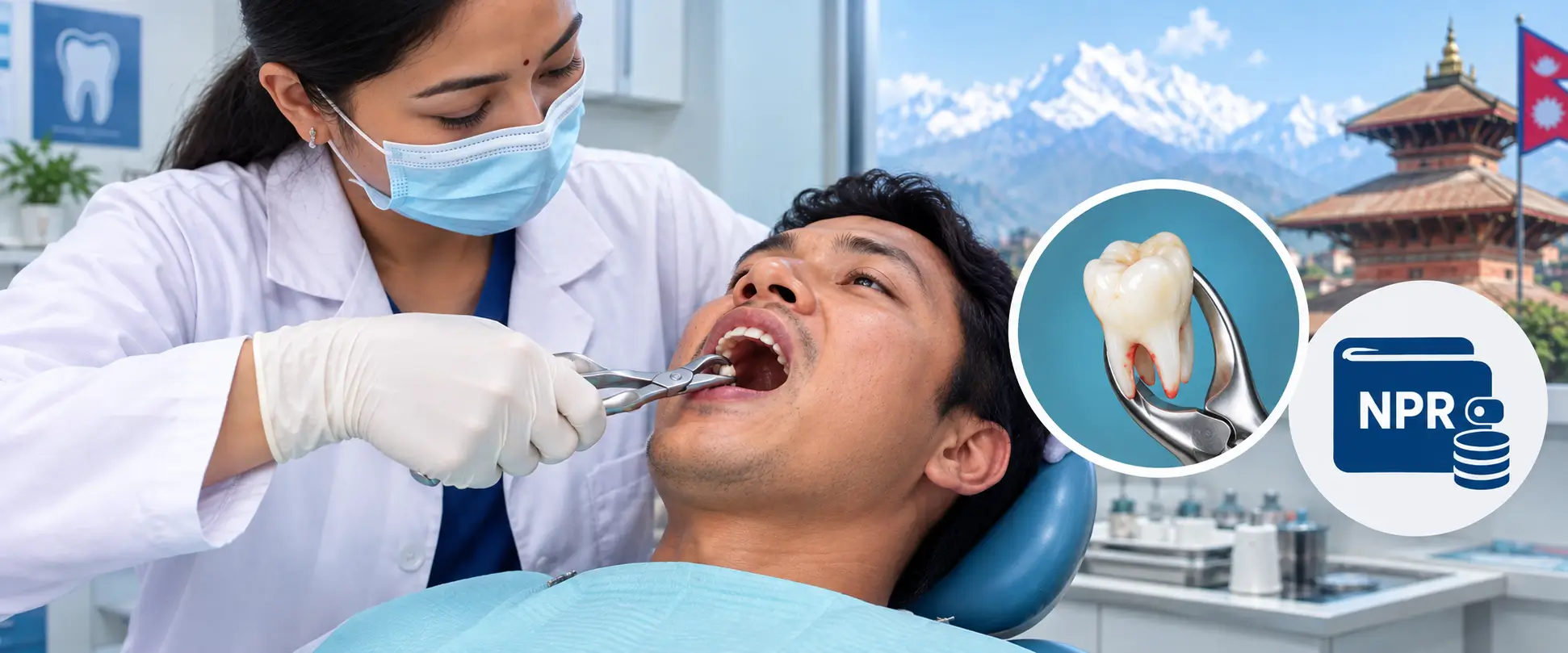
Tooth extraction removes a tooth completely from its socket. This becomes necessary when a tooth is too severely damaged or infected to be restored.
Tooth extraction may be recommended when:
• The tooth is severely broken beyond repair
• There is extensive decay
• Severe gum disease has caused the tooth to become loose
• The tooth has a major fracture
• There is not enough healthy tooth structure remaining
• A wisdom tooth is impacted or causing complications
• The tooth cannot be successfully treated with root canal treatment
After an extraction, replacing the missing tooth with a dental implant, bridge, or denture is usually recommended, depending on the situation.
Which Option Is Better?
Root canal treatment is generally the preferred option when the natural tooth can be successfully saved. Keeping the natural tooth helps maintain a normal bite, chewing function, and the position of surrounding teeth.
Tooth extraction becomes the better solution when the tooth cannot be restored safely or predictably. The decision should always rest on a detailed clinical examination and X-rays, not on the treatment's cost or speed alone.
Why Saving Your Natural Tooth Can Matter
Natural teeth are designed to work together. Losing a tooth without replacing it can lead to problems such as:
• Shifting of neighbouring teeth
• Difficulty chewing
• Changes in bite alignment
• Bone loss in the jaw
• Changes in appearance, depending on the location of the missing tooth
This is why dentists often recommend root canal treatment when there is a good chance of saving the tooth successfully.
Is Tooth Extraction the Simpler Option?
Extraction can look like the quicker solution, but removing a tooth can create additional treatment needs later. If the missing tooth needs replacing, the options are typically a dental implant, a dental bridge, or a removable denture.
Both the immediate treatment and the long-term implications are worth weighing before deciding.
How Dentists Decide Between Root Canal Treatment and Extraction
A dentist examines several factors before recommending a treatment path.
1. Amount of Healthy Tooth Structure
If enough healthy tooth structure remains, the tooth may be suitable for restoration after root canal treatment.
2. Severity of Infection
The extent of infection, and whether it can be successfully treated, influences the decision directly.
3. Condition of the Tooth Roots
Healthy and stable roots support the possibility of saving the tooth.
4. Presence of Fractures
A severely fractured tooth, particularly one with a fracture extending deep into the root, may require extraction.
5. Gum and Bone Health
The condition of the surrounding gums and bone also affects the tooth's long-term prognosis.
Making This Decision at Studio Dentale
Choosing between root canal treatment and extraction starts with a thorough diagnosis, not a quick recommendation. At Studio Dentale, this evaluation is done using digital X-rays and a detailed clinical examination to assess whether a tooth can be predictably saved before any treatment is suggested.
Patients at the Kathmandu and Lalitpur clinics receive a clear explanation of both options, including the advantages and limitations of each, before any treatment decision is made.
Frequently Asked Questions
Is root canal treatment always better than extraction?
Not always. Root canal treatment is preferred when enough healthy tooth structure and stable roots remain, but extraction is the safer option when a tooth is too damaged to restore predictably.
Is root canal treatment more expensive than extraction?
Extraction alone usually costs less upfront, but if the missing tooth needs replacing with an implant, bridge, or denture, the total cost over time can exceed that of saving the tooth with root canal treatment.
Does tooth extraction hurt more than root canal treatment?
Both procedures are performed under local anaesthesia, so pain during the procedure itself is well controlled either way. Recovery discomfort varies by case rather than by which procedure was done.
Can every damaged tooth be saved with root canal treatment?
No. A tooth with a fracture extending deep into the root, extensive bone loss, or unstable roots usually cannot be saved predictably, even with root canal treatment.
What happens if I don't replace an extracted tooth?
Neighbouring teeth can shift into the gap over time, the opposing tooth can over-erupt, and chewing on that side becomes less effective. This is why a replacement plan is usually discussed alongside the extraction itself.
Whether your tooth can be saved or needs to be replaced, a clinical examination at Studio Dentale's Kathmandu or Lalitpur clinic can confirm the right path for your case. Schedule an appointment or call Kathmandu team at +977- 4532180/81 or Lalitpur team at +977 980-1119282.