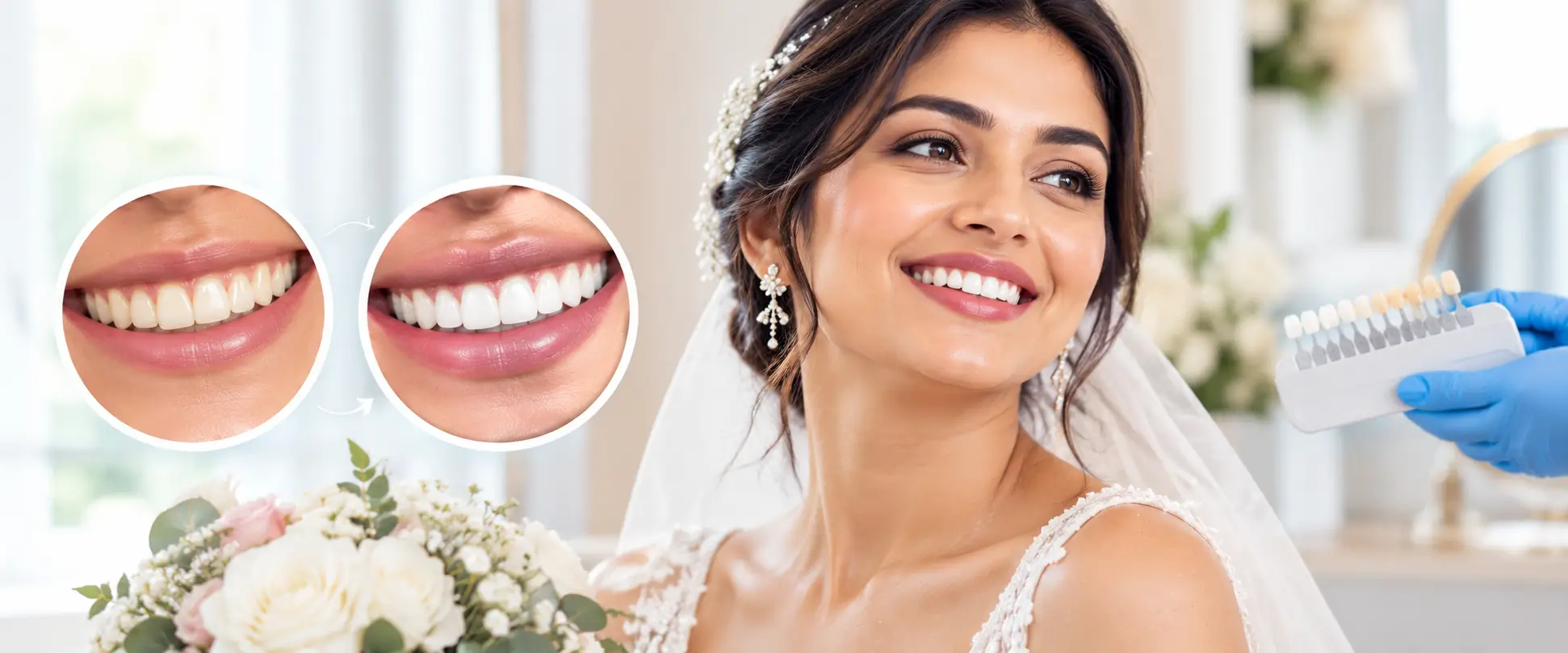
A wedding puts your smile in front of cameras, family, and guests across several days, and in photographs that last for decades. Professional teeth whitening can brighten that smile, and the result depends on starting at the right time, choosing the right method, and preparing your teeth first.
This guide covers the timeline, the methods that work, what to avoid, and how to plan around crowns, sensitivity, and the food and drink of wedding celebrations. It applies equally to brides, grooms, and anyone in the wedding party.
When Should You Start Teeth Whitening Before a Wedding?
Book a dental consultation 6 to 8 weeks before the wedding, and complete professional whitening 2 to 4 weeks before. That gap gives sensitivity time to settle, the shade time to stabilise, and room for a touch-up if the result needs one.
If a pre-wedding photoshoot or engagement function comes first, count back from that date instead. With less time, professional whitening is still possible in many cases, and the options for short timelines are covered below.
Wedding Teeth Whitening Timeline
|
Time Before the Wedding |
What to Do |
Why It Matters |
|
6 to 8 weeks |
Dental check-up, professional cleaning, and whitening consultation |
Surface stains and tartar come off first, and the dentist can identify the cause of discolouration and set a realistic target shade |
|
4 to 6 weeks |
Treat any cavities, gum problems, or sensitivity; start a desensitising toothpaste if advised |
Whitening should begin on healthy teeth, and sensitive teeth cope better with preparation |
|
2 to 4 weeks |
Complete professional whitening |
Leaves time for sensitivity to settle, the shade to stabilise, and a touch-up if one is needed |
|
1 to 2 weeks |
Review the shade and complete any touch-up |
Final adjustments without pressure from the wedding date |
|
1 week |
Stop all whitening and avoid new products or treatments |
Prevents unexpected sensitivity or gum irritation close to the event |
|
1 to 2 days |
Normal brushing, flossing, and hydration; limit strongly pigmented food and drink |
Protects the result |
|
Wedding day |
Brush, floss, carry water, and enjoy the day |
Nothing new on the day itself |
This is a general guide. A dentist may adjust it based on the whitening method, your starting shade, and how sensitive your teeth are.
What If You Have Less Time?
About 3 weeks. Professional whitening is realistic for most patients with healthy teeth. Take-home trays have time to work, and an in-office session leaves a couple of weeks for any sensitivity to ease.
1 to 2 weeks. An in-office session after a professional cleaning is usually the practical choice. Results show immediately, and sensitivity can last several days, so this timing suits patients without a history of sensitive teeth.
Under 1 week. A professional cleaning and polish is the safest way to brighten teeth. Starting whitening this close leaves little time for sensitivity or gum irritation to settle, so most dentists advise waiting until after the wedding.
Why Timing Advice Online Varies So Much
Advice ranges from one week to several months because four things change the answer: the method, whether it is your first time whitening, how sensitive your teeth are, and how much buffer you want for a touch-up. In-office results are immediate, while trays and strips build over one to two weeks. A window of 2 to 4 weeks suits most people across those variables.
Which Teeth Whitening Method Works Best for a Wedding?
No single method suits everyone. The comparison below shows how the main options differ.
|
Method |
How It Works |
Speed of Result |
Best For |
|
In-office whitening |
Higher-strength gel applied by the dentist, with the gums protected |
One visit of roughly 60 to 90 minutes, with a visible change the same day |
A fixed date and healthy teeth |
|
Dentist-supervised take-home whitening |
Custom-fitted trays with professional gel, worn at home |
Gradual, typically over one to two weeks |
Sensitive teeth, or a longer lead time |
|
Combination approach |
An in-office session followed by take-home trays for refinement and touch-ups |
Immediate lift plus gradual refinement |
First-time whitening or deeper staining |
|
Over-the-counter strips |
Low-strength gel on flexible strips |
Often one to two weeks, with variable results |
Mild staining, where an uneven fit is acceptable |
|
Whitening toothpaste |
Mild abrasives or low-strength peroxide |
Weeks, and surface stains only |
Maintenance after professional whitening |
|
Home remedies (lemon, baking soda, charcoal) |
Acidic or abrasive substances |
Unreliable |
Best avoided, since they can irritate gums and wear tooth surfaces |
In-office whitening can lighten teeth by several shades in one visit, and by up to eight shades in favourable cases. Take-home trays work more slowly and allow gentle, adjustable progress. The right choice depends on your starting shade, the cause of staining, your sensitivity, and how quickly you want to see a change.
Can You Whiten Your Teeth at Home Before a Wedding?
Over-the-counter strips and gels can lighten natural teeth to varying degrees, and results are less predictable than supervised treatment because fit and gel strength differ from product to product. If you choose one, look for a recognised dental association seal, such as the American Dental Association Seal of Acceptance, follow the instructions exactly, and allow at least four weeks so there is time to adjust or stop if sensitivity appears.
Lemon juice, baking soda, and charcoal are best avoided. Acidic or abrasive substances can irritate the gums and wear the tooth surface.
How White Should Your Wedding Smile Be?
A natural shade photographs better than the whitest possible one. Dentists often aim for a brightness close to the whites of the eyes, because teeth far brighter than the eyes and skin can look flat or artificial under flash and video lighting.
Three habits help the result look natural:
-
Keep the shade even across the front teeth, including any crowns, veneers, or fillings
-
Agree on a target shade with your dentist before treatment starts
-
Check the result in daylight as well as indoor lighting
Makeup also changes how teeth look. Cooler-toned lip colours tend to make teeth look brighter than orange or brown tones, which is worth raising with your makeup artist.
Will Whitening Work on Your Type of Stain?
Whitening works best on stains that sit on or in the outer enamel. Stains that start deeper inside the tooth respond less predictably.
|
Cause of Discolouration |
Typical Response to Whitening |
|
Tea, coffee, red wine, turmeric, or tobacco staining |
Usually responds well |
|
Natural yellowing with age |
Usually responds, though the degree varies |
|
Fluorosis (white or brown spots from childhood fluoride exposure) |
Variable, and whitening can make white spots more visible, so an assessment comes first |
|
Tetracycline staining (grey or brown banding from childhood medication) |
Slower and less predictable, and may need extended treatment or veneers |
|
A single darkened tooth after trauma or root canal treatment |
Surface whitening does not fix it, and internal bleaching or a restoration may be needed |
A dentist can identify the cause during the consultation, which is why the assessment comes before any whitening gel is applied.
Crowns, Veneers, and Fillings: Whiten First, Then Match
Whitening gel brightens natural tooth structure only. Crowns, veneers, and tooth-coloured fillings keep the shade they were made in, so a whitened smile can leave visible restorations looking darker by comparison.
The reliable order has three steps:
1. Whiten the natural teeth first.
2. Wait about two weeks for the shade to stabilise. Bond strength to freshly bleached enamel is also reduced during this period, which is another reason bonded work is delayed.
3. Match any new crowns, veneers, or bonding to the final shade.
For a wedding, this means patients who need new restorations should start earlier, ideally 8 weeks or more before the date, so whitening, the waiting period, and restoration work all fit. If you have restorations on your front teeth, raise them at the first consultation.
Sensitivity and Gum Comfort: Planning Around It
Temporary sensitivity to hot and cold is the most common effect of whitening, and mild gum irritation can occur when gel touches the gums. Both usually settle within a few days, although in-office sessions can cause stronger sensitivity that lasts longer.
These steps reduce the risk:
-
Tell your dentist about existing sensitivity before treatment so the method and gel strength can be adjusted
-
Use a desensitising toothpaste, typically containing potassium nitrate, for one to two weeks before and during whitening if your dentist agrees
-
Choose gradual take-home whitening if your teeth are sensitive
-
Pause treatment for a few days if discomfort builds
-
Avoid very hot, very cold, or acidic food and drink for a day or two after an in-office session
This is why whitening a day or two before the wedding carries risk. A buffer of at least two weeks means sensitivity is behind you when it matters.
Who Should Wait or Avoid Whitening?
A dental examination decides this, and whitening is usually postponed or avoided in these situations:
-
Untreated cavities or active gum disease
-
Pregnancy or breastfeeding, since safety data is limited
-
A known allergy to peroxide
-
Severe sensitivity, or exposed roots from gum recession
-
Children and young teenagers, unless a dentist specifically recommends it
In these cases, a professional cleaning and polish can still brighten the smile for the wedding.
Keeping Your Smile Bright Through the Wedding Celebrations
Freshly whitened teeth are more prone to staining for the first 48 hours, and wedding events are full of staining food and drink.
The First 48 Hours After Whitening
-
Avoid tea, coffee, red wine, cola, turmeric-rich foods, dark curries, betel and paan, and tobacco
-
Choose lighter foods such as rice, chicken, fish, pasta, cauliflower, and white sauces
-
Drink water freely, and use a straw for coloured drinks where possible
Through the Celebrations That Follow
-
Rinse with water after tea, coffee, or wine
-
Brush twice daily with a soft brush and fluoride toothpaste, and floss daily
-
Carry water or sugar-free gum between events
-
Use take-home touch-up trays if your dentist provided them
Results commonly last from several months to two years, depending on diet, smoking, and oral hygiene.
Beyond Whitening: Other Wedding Smile Treatments and How Long They Take
If your smile goals go beyond brightness, the order and lead time of each treatment matter.
|
Treatment |
Typical Lead Time |
Planning Note |
|
Scaling and polishing |
One visit |
Removes surface stains and tartar, and suits the weeks before the wedding |
|
Professional whitening |
One visit to two weeks |
Complete 2 to 4 weeks before the wedding |
|
Tooth-coloured bonding |
One visit |
Placed after whitening has settled, so it matches the final shade |
|
Veneers or crowns |
Usually two visits over two to three weeks |
Plan whitening first, then allow about two weeks before shade matching |
|
Clear aligners or braces |
Often six months or more |
Start well ahead of the wedding |
A consultation three to six months before the wedding keeps every option open, including treatments that take longer.
How to Choose a Dentist for Wedding Teeth Whitening in Kathmandu and Lalitpur
Whitening offers are easy to find in Kathmandu and Lalitpur, and the quality of the assessment behind them varies. Look for a dental team that:
-
Examines your teeth and gums before whitening
-
Explains the available options and recommends one for your teeth and timeline
-
Identifies the cause of your discolouration
-
Treats cavities and gum problems first
-
Considers existing crowns, veneers, and fillings
-
Discusses sensitivity and how it will be managed
-
Agrees a realistic target shade and gives clear aftercare instructions
-
Builds a timeline around your wedding date
Questions worth asking at the consultation:
-
What is causing my discolouration, and will whitening work on it?
-
Which method suits my teeth and my timeline?
-
How many weeks before the wedding should I start?
-
Will my crowns, veneers, or fillings affect the plan?
-
How much sensitivity should I expect, and how will it be managed?
-
What should I avoid afterwards, and is a follow-up or touch-up included?
The aim is a healthy, natural-looking smile that suits your face and photographs well.
Wedding Smile Planning at Studio Dentale
Studio Dentale's cosmetic and restorative care at its Kathmandu and Lalitpur clinics is led by Dr. Nikita Agarwal, cosmetic dentist with an MDS in Prosthodontics and Oral Implantology from Manipal University, where she was a gold medalist. She is a Diplomate of the International Congress of Oral Implantologists, with over 15 years of clinical experience in restorative dentistry, smile makeovers, and digital dental workflows.
A wedding whitening plan starts with an examination covering tooth and gum health, existing fillings, crowns, or veneers, the type of discolouration, sensitivity, previous whitening, and the result you want. The recommendation follows from that assessment: a suitable whitening method, a realistic target shade, any preparation such as cleaning or treatment of cavities, and a timeline counted back from your wedding date.
Cosmetic treatment at Studio Dentale considers tooth colour, tooth proportions, existing restorations, bite, and gum health together, because a wedding smile should look natural in person as well as in photographs. A consultation at either clinic, ideally 6 to 8 weeks before the wedding, leaves enough time for every option in this guide.
How Much Does Wedding Teeth Whitening Cost?
Cost depends on the whitening method, the starting shade and cause of discolouration, any preparation such as cleaning or treating cavities, and whether trays and follow-up are included.
|
Service |
Estimated Cost |
|
Professional cleaning and polish |
NPR 4000 to NPR 7500 |
|
In-office whitening |
NPR 25000 to NPR 35000 |
|
Dentist-supervised take-home whitening (custom trays and gel) |
Starts at NPR 18000 |
Ask whether the quoted fee includes the consultation, the whitening treatment, custom trays if needed, desensitising products, and a follow-up visit. A confirmed quote after the examination is the figure to plan around.
Frequently Asked Questions
How many weeks before a wedding should I whiten my teeth?
Complete professional whitening 2 to 4 weeks before the wedding, and book the consultation 6 to 8 weeks before. This leaves time for preparation, for sensitivity to settle, and for a touch-up if needed.
Can I whiten my teeth one week before my wedding?
In many cases an in-office session is possible with a week to spare, after a professional cleaning. Sensitivity can last several days, so this suits patients without a history of sensitive teeth, and a dentist should confirm it first.
Is in-office or take-home whitening better for a wedding?
In-office whitening gives a visible change in a single visit of about 60 to 90 minutes. Take-home trays work gradually over one to two weeks and suit sensitive teeth or longer lead times. A combination often gives the most controlled result for first-time patients.
How long do wedding teeth whitening results last?
Results commonly last from several months to two years, depending on diet, smoking, and oral hygiene. Tea, coffee, red wine, and tobacco shorten the result, and touch-up trays can extend it.
Is professional teeth whitening safe for my teeth?
Dentist-supervised whitening is considered safe for healthy teeth when used as directed. The common effects are temporary sensitivity and mild gum irritation, and overuse or unsupervised use raises the risk.
Does whitening work on crowns, veneers, and fillings?
No. Whitening affects natural tooth structure only, so restorations keep their original shade. Whiten the natural teeth first, wait about two weeks, then match any new restorations to the final shade.
Can grooms and the wedding party whiten their teeth too?
Yes. The same timeline and precautions apply to everyone. Booking together keeps schedules aligned and gives everyone the same lead time.
Is whitening safe during pregnancy?
Safety data on whitening during pregnancy and breastfeeding is limited, so dentists generally advise postponing it. A professional cleaning and polish can brighten the smile in the meantime.
Plan Your Wedding Smile Early
A brighter smile on the wedding day starts with a consultation weeks earlier. The examination decides the method, the shade, and the timeline, and a visit to Studio Dentale's Kathmandu or Lalitpur clinic can confirm all three for your teeth.