A missing tooth affects more than appearance. It changes how you chew, how you speak, and over time, the shape of the jawbone itself. Dental implants have become the standard replacement option because they replace the tooth root, not just the visible crown, which is why they function and last differently from a bridge or a denture.
This guide covers what a dental implant is, how the procedure works, the technology involved, which clinic provides advanced implant treatment in Nepal and what recovery and long-term care look like.
What Is a Dental Implant?
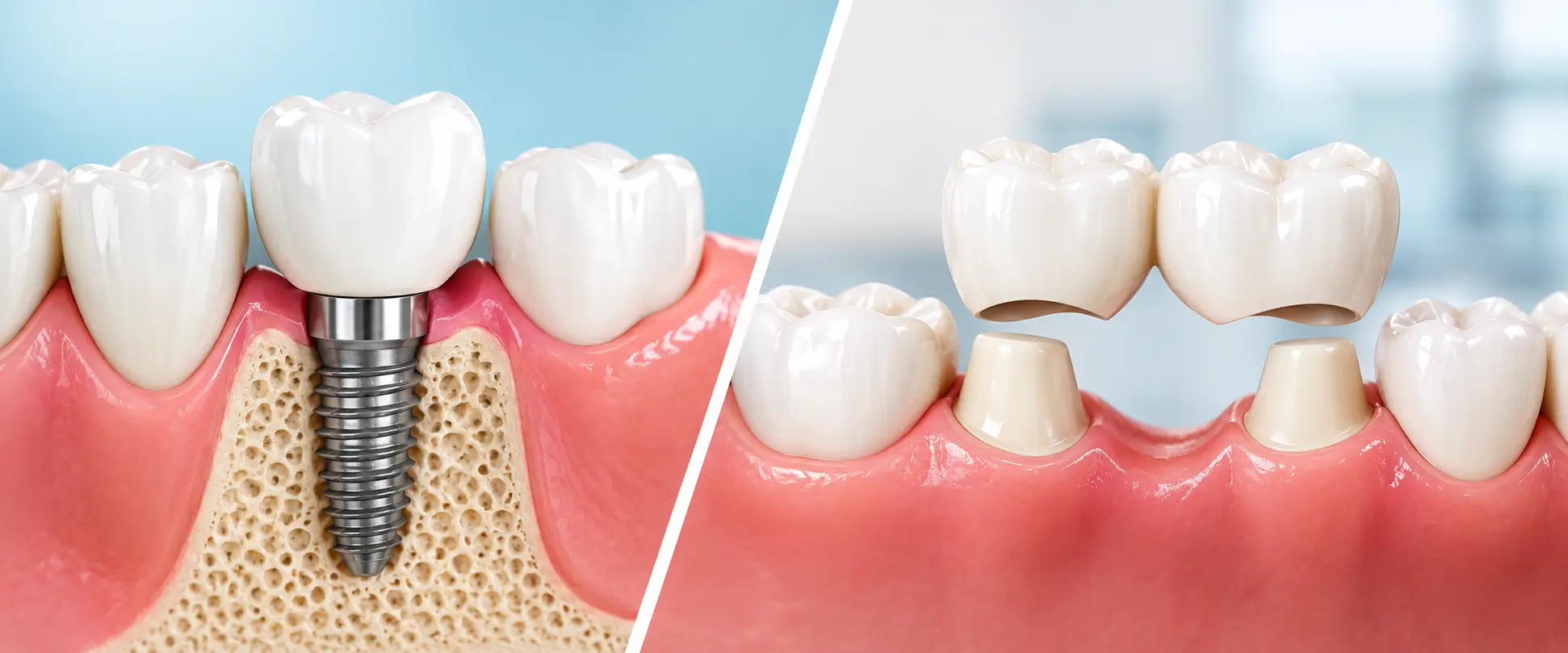
A dental implant is a titanium or zirconia post placed into the jawbone to act as an artificial tooth root. Once it fuses with the bone through a process called osseointegration, an abutment is attached on top, followed by a custom crown. Together, these three parts, the implant body, the abutment, and the crown, recreate both the root and the visible tooth.
Why Replacing a Missing Tooth Matters
Leaving a missing tooth unreplaced affects more than the empty space itself. Over time:
- Adjacent teeth can tilt or drift into the open space
- The opposing tooth can over-erupt, since it no longer has anything to bite against
- Chewing on that side becomes less effective
- Jawbone in the area begins to shrink from lack of stimulation
- A missing front tooth can affect confidence when speaking or smiling
These changes tend to develop gradually, which is why dentists generally recommend replacing a missing tooth soon after it is lost rather than waiting.
Dental Implants vs Dental Bridges
Bridges and implants both replace missing teeth, but they work differently.
Dental bridges. A bridge is anchored to the two teeth on either side of the gap, which need to be reshaped to support it. This reduces healthy tooth structure on those adjacent teeth, and the bridge’s lifespan depends on the health of the teeth supporting it.
Dental implants. An implant is placed directly into the jawbone and functions independently of the neighboring teeth. It does not rely on adjacent teeth for support, so those teeth are left untouched.
A bridge remains a reasonable option when an implant is not possible, such as insufficient bone volume that a patient chooses not to correct with grafting. For most patients with adequate bone, an implant is the closer match to a natural tooth in both function and longevity.
Who Is a Candidate for Dental Implants?
Most adults with healthy gums and enough jawbone volume to support an implant are candidates. Patients with bone loss can often still qualify after a bone graft or sinus lift adds the volume needed. Conditions like uncontrolled diabetes or active gum disease need to be managed first, since they affect healing and the implant’s chances of success. A clinical evaluation, including imaging of the jawbone, is what determines candidacy, not age or the number of missing teeth alone.
The Dental Implant Procedure, Step by Step
1. Consultation and imaging. A clinical exam and a 3D CBCT scan map the jawbone’s density, volume, and the position of nerves, which guides exactly where and how the implant should be placed.
2. Treatment planning. Using the scan, the implant position, angle, and depth are planned in advance, often with the help of guided surgery software.
3. Implant placement. Under local anesthesia, an incision is made in the gum, the jawbone is prepared, and the implant is placed into position. The gum is then closed around it.
4. Healing and osseointegration. Over roughly three to six months, the implant fuses with the surrounding bone. This healing period cannot be shortened without risking implant stability.
5. Abutment placement. Once integration is confirmed, an abutment is attached to the implant to serve as the connector for the crown.
6. Final crown placement. A custom crown, matched to the shade and shape of the surrounding teeth, is fitted onto the abutment, completing the restoration.
In select cases where bone quality and implant stability allow it, a temporary crown can be placed on the same day as surgery. This is decided case by case and is not suitable for every patient.
Technology Behind Modern Implant Treatment
3D CBCT imaging. Gives a three-dimensional view of the jawbone before surgery, which reduces guesswork and surgical risk compared to two-dimensional X-rays alone.
Guided implant surgery. Uses the CBCT data to create a surgical guide, so the implant is placed at the planned position, angle, and depth with less margin for error.
CAD/CAM crown design. Custom crowns are digitally designed and milled to fit the implant precisely, which improves both fit and appearance compared to manually fabricated crowns.
Biocompatible materials. Titanium and zirconia are used for the implant body because both integrate well with bone and are well tolerated by the body over the long term.
These tools do not replace clinical judgment. They support it, and the skill of the treating dentist still determines how well they are used.
Benefits of Dental Implants
Durability. Dental implants have a reported success rate above 95 percent over ten years when properly placed and maintained, higher than most alternative options.
Bone preservation. A missing tooth root means the jawbone in that area no longer receives the stimulation it needs, and the bone gradually resorbs over time. An implant replaces that root and helps maintain the bone around it.
Stability for neighboring teeth. Because an implant fills the gap, adjacent teeth are less likely to tilt or drift into the space.
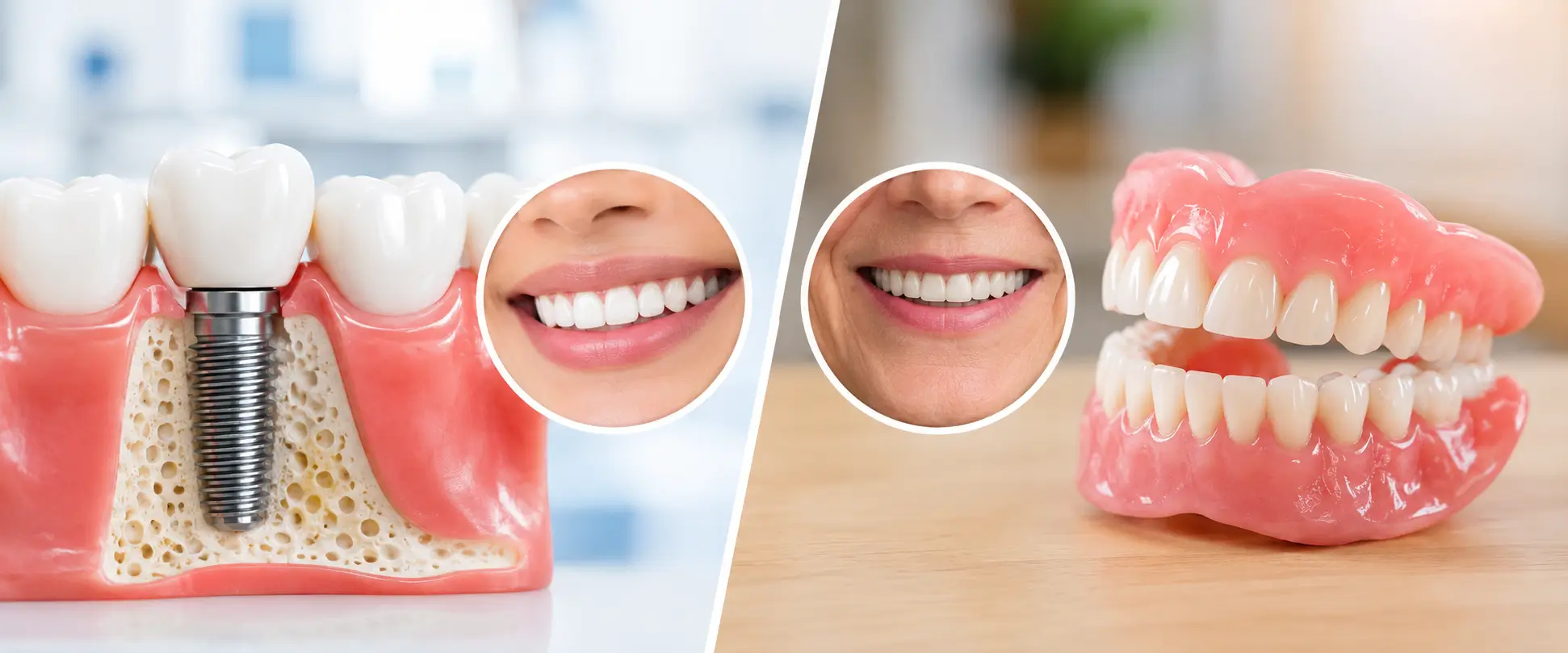
Natural function. An implant-supported crown behaves closer to a natural tooth when chewing and speaking than a removable denture does.
Recovery: What to Expect After Surgery
The first three to four days after surgery are the most important for healing.
Swelling and discomfort. Mild swelling and soreness are normal in the first two to three days. An ice pack and the pain relief your dentist prescribes usually keep this manageable.
Minor bleeding. Some blood-tinged saliva is normal on the day of surgery. Gauze placed over the area helps control this, and it should ease within a day.
Diet. Soft foods and lukewarm liquids are recommended for the first few days, avoiding anything hard, crunchy, or very hot at the surgical site.
Activity. Light activity is usually fine within a few days, but strenuous exercise should wait about a week to avoid increasing blood flow to the surgical site.
Contact your dentist if bleeding does not settle, swelling worsens after the third day, or pain increases rather than easing.
Long-Term Care and Maintenance
Once healed, an implant needs the same ongoing care as a natural tooth, plus a few implant-specific habits.
Daily hygiene. Brush twice a day with a soft-bristled brush, and clean around the implant crown with floss or an interdental brush, since plaque can build up around an implant the same way it does around natural teeth.
Diet habits. Avoid biting down on very hard objects like ice or pen caps, and be cautious with sticky foods that can stress the crown or irritate the surrounding gum.
Managing bruxism. Patients who grind or clench their teeth should discuss a nightguard with their dentist, since the excess force can affect the implant over time.
Routine dental visits. Regular check-ups let the dentist monitor the implant, clean areas a toothbrush cannot reach, and catch early signs of gum inflammation around the implant before they progress.
How to Choose the Right Implant Dentist
Implant treatment depends heavily on planning accuracy and surgical precision, which makes the treating dentist’s training and diagnostic tools worth checking before starting treatment. It is reasonable to ask whether the clinic uses 3D CBCT imaging rather than standard X-rays, whether the treatment plan is reviewed before surgery, and what materials are used for the implant and crown. A dentist who explains these details clearly, rather than only quoting a price, is generally a good sign.
Dental Implants in Kathmandu and Lalitpur
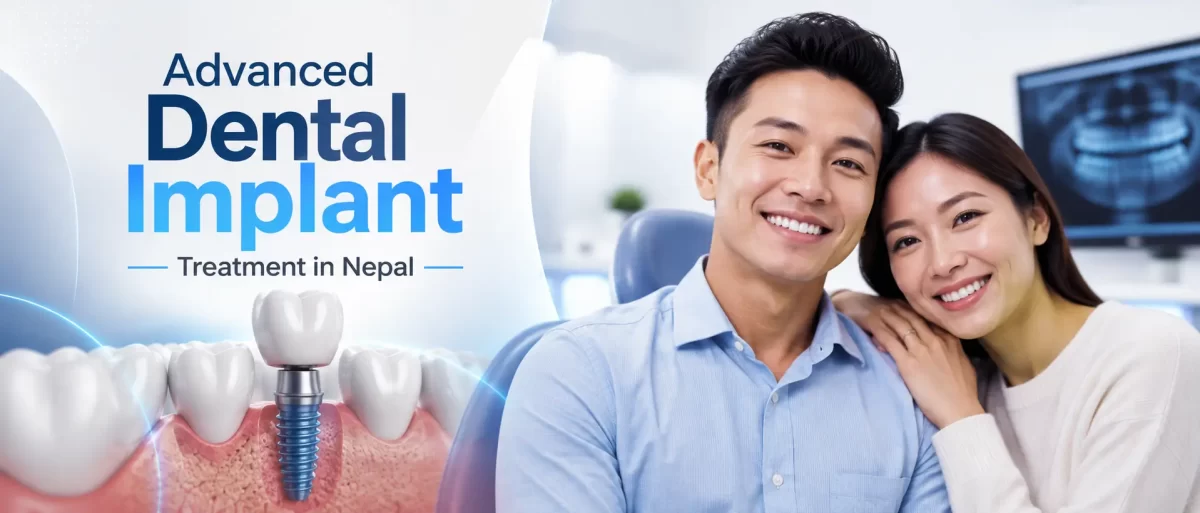
Studio Dentale provides dental implant treatment at its Kathmandu and Lalitpur clinics, led by Dr. Nikita Agarwal, a leading Prosthodontist, Oral Implantologist, and Digital Dentist in Nepal with over 15 years of clinical experience in advanced restorative, implant, and aesthetic dentistry. Both clinics use the same digital diagnostics, implant systems, and treatment protocol, so patients can choose whichever location is more convenient for consultation, surgery, and follow-up visits.
Frequently Asked Questions
Are dental implants painful?
The placement procedure is done under local anesthesia, so patients do not feel pain during surgery. Mild soreness and swelling for a few days afterward is normal and manageable with routine care.
How long do dental implants last?
With proper oral hygiene and regular dental visits, an implant can last for decades. The crown on top may need replacement after 10 to 15 years depending on wear, but the implant itself, once integrated, is designed to be a long-term solution.
What is the difference between a dental implant and a dental bridge?
An implant is placed in the jawbone and functions independently of neighboring teeth, while a bridge is anchored to the teeth on either side of the gap, which need to be reshaped to support it.
How long does the implant process take from start to finish?
Most cases take three to six months from placement to final crown, since the implant needs time to fuse with the jawbone before it can safely support a crown.
Can dental implants fail?
Implant failure is uncommon when the procedure is properly planned and the patient follows aftercare instructions, but it can happen due to infection, insufficient bone integration, or uncontrolled grinding. Regular check-ups help catch early warning signs.
Whether you are missing one tooth or several, the right treatment plan depends on a clinical evaluation of your jawbone and oral health. A consultation at Studio Dentale’s Kathmandu or Lalitpur clinic can confirm what applies to your case.