

For many parents, a child’s first dental visit brings a mix of excitement and anxiety.Will my child be scared? Is it too early? What actually happens during the appointment?
If you are searching for a trusted pediatric dentist in Kathmandu, understanding what to expect can help you prepare both yourself and your child.
This guide explains everything parents should know about children’s dental care in Nepal and how to make the first visit smooth and stress-free.
When Should a Child First Visit the Dentist?
According to international pediatric dental guidelines, a child should visit the dentist by:
- Their first birthday, or
- Within six months of the first tooth erupting
Early visits are mainly preventive. They allow the dentist to monitor development, detect early concerns, and guide parents on proper oral hygiene practices.
What Happens During the First Dental Visit?
The first appointment is usually simple, gentle, and educational.
A pediatric dentist in Kathmandu will typically:
- Review your child’s medical and dental history
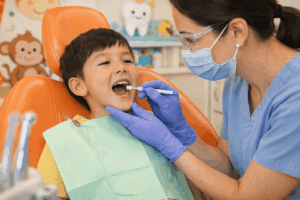
- Examine teeth, gums, and jaw development
- Check for early signs of decay
- Assess bite and oral habits (thumb sucking, pacifier use)
- Provide preventive guidance to parents
In most cases, no major procedures are done during the first visit unless necessary.
The goal is to build trust not fear.
Will My Child Be Scared?
It is normal for children to feel unsure in a new environment. However, modern children’s dental care in Nepal focuses heavily on behavioral management techniques.
Experienced pediatric dentists use:
- Friendly language instead of technical terms
- “Tell-Show-Do” techniques
- Positive reinforcement
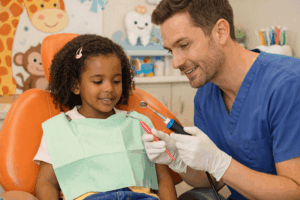
- Child-friendly clinic environments
Parents are often allowed to stay with younger children during the visit to provide reassurance.
Do Children Need X-Rays During the First Visit?
Not always.
Dental X-rays are only recommended if:
- There are signs of cavities
- The dentist suspects hidden issues
- There is a history of trauma
- Tooth development needs evaluation
Modern digital X-rays use minimal radiation and are considered safe when clinically necessary.
How Parents Should Prepare Their Child
Preparation makes a big difference.
Here’s what you can do before the appointment:
- Speak positively about the dentist
- Avoid using words like “pain,” “injection,” or “hurt”
- Read children’s books about visiting the dentist
- Schedule the appointment when your child is well-rested
Your attitude directly influences your child’s comfort level.
Common Concerns Parents Have
1. Cavities in Baby Teeth
Many parents assume baby teeth are temporary and less important. In reality, untreated cavities can affect permanent teeth and overall health.
2. Thumb Sucking & Pacifier Use
Your dentist will assess whether these habits may affect jaw or bite development.
3. Early Orthodontic Evaluation
Some children may need early assessment to prevent future alignment problems.
Preventive Focus in Children’s Dental Care in Nepal
Modern pediatric dentistry emphasizes prevention over treatment.
This may include:
- Fluoride applications
- Dental sealants
- Oral hygiene demonstrations
- Diet counseling for parents
Early preventive care reduces the likelihood of complicated treatments later.
How Often Should Children Visit the Dentist?
Most children should have a dental check-up every six months. However, the frequency may vary depending on cavity risk and oral hygiene habits.
Regular visits help:
- Monitor tooth development
- Detect problems early
- Reinforce healthy habits
- Build dental confidence
In Summary
The first dental visit is not about treatment, it is about trust, prevention, and education.
Choosing an experienced pediatric dentist in Kathmandu ensures your child receives gentle, structured, and preventive-focused care.
Quality children’s dental care in Nepal aims to create positive early experiences so that dental visits become a normal and comfortable part of growing up.
A confident child today leads to a healthy smile tomorrow.